
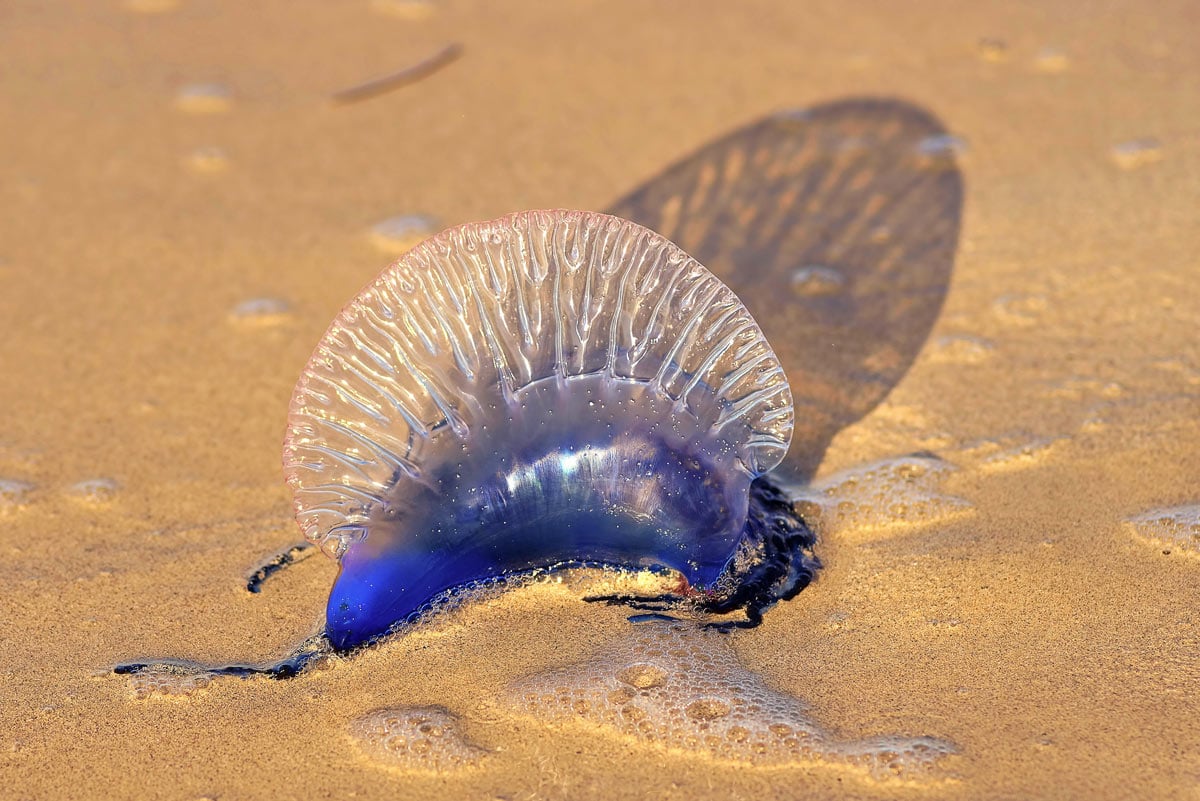
Jellyfish in Cabo: When They Show Up & How to Avoid Stings
So it’s June. Or maybe October or early November. (Whatever, it’s a hot summer or fall month!)
The Sea of Cortez is fabulously warm. And you’re itching to go swimming and snorkeling!
But, ugh… You’ve heard about those blobby things that sting.
And now you’re wondering: Are there jellyfish in Cabo San Lucas? Are they really a problem? When do they show up? And should you be worried about getting stung?
First, the good news: In all our years of swimming and snorkeling in Cabo, we’ve never been stung by one. Thankfully! We’ve seen jellies washed up on Cabo beaches recently, though.
And, yes, jellyfish – and jellyfish-like creatures – do sometimes turn up in the Los Cabos area.
So here’s what you need to know – when they they’re most likely to show up, which ones to watch for and what to do if one gets you.
Jellyfish in Cabo: The quick answer
Here’s the need-to-know version:
- YES, THEY’RE HERE → Jellyfish turn up in Cabo occasionally, but they’re not a constant problem.
- WARMER MONTHS → You’re more likely to encounter them from summer into fall.
- WATCH FOR MAN-O-WARS → These blue or purplish jellyfish-like creatures can deliver a very painful sting.
- CHECK THE FLAGS → Look at the beach flag and ZOFEMAT updates. A white or purple flag can warn of harmful marine life.
- SEE JELLIES? STAY OUT → If they’re washed up on the beach or floating in the water, we wouldn’t go in.
Are there jellyfish in Cabo San Lucas?
Yes. But they come and go.
Jellyfish and other stinging marine creatures periodically drift into the waters around Los Cabos.
Locally, you’ll often hear them called aguamalas – literally “bad waters.”
They can appear in clusters or blooms, depending on ocean currents, winds and water temperatures. And because those conditions change, there’s no reliable way to say that Medano, Chileno, Santa Maria or another beach will always have fewer jellyfish.
In April, 2026, Los Cabos authorities reported treating aguamala stings around the region, including the East Cape.
Then in June, two tourists were taken to hospital after being stung near Chileno and Pelican beaches.
That sounds alarming. But these are occasional events – not a reason to stay out of the water altogether.
We certainly don’t!
What types of jellyfish are found in Cabo?
For vacation purposes, we wouldn’t get too hung up on identifying every translucent blob floating past your snorkel mask.
Portuguese man-of-war
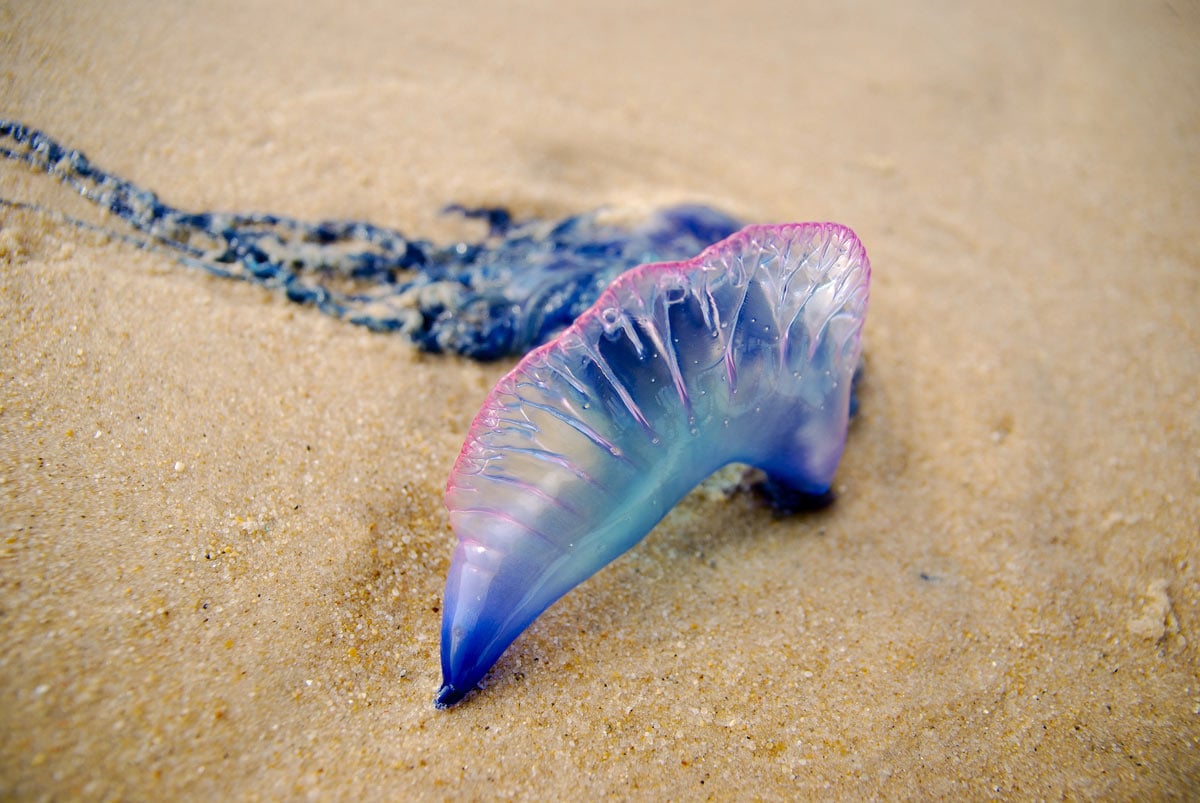
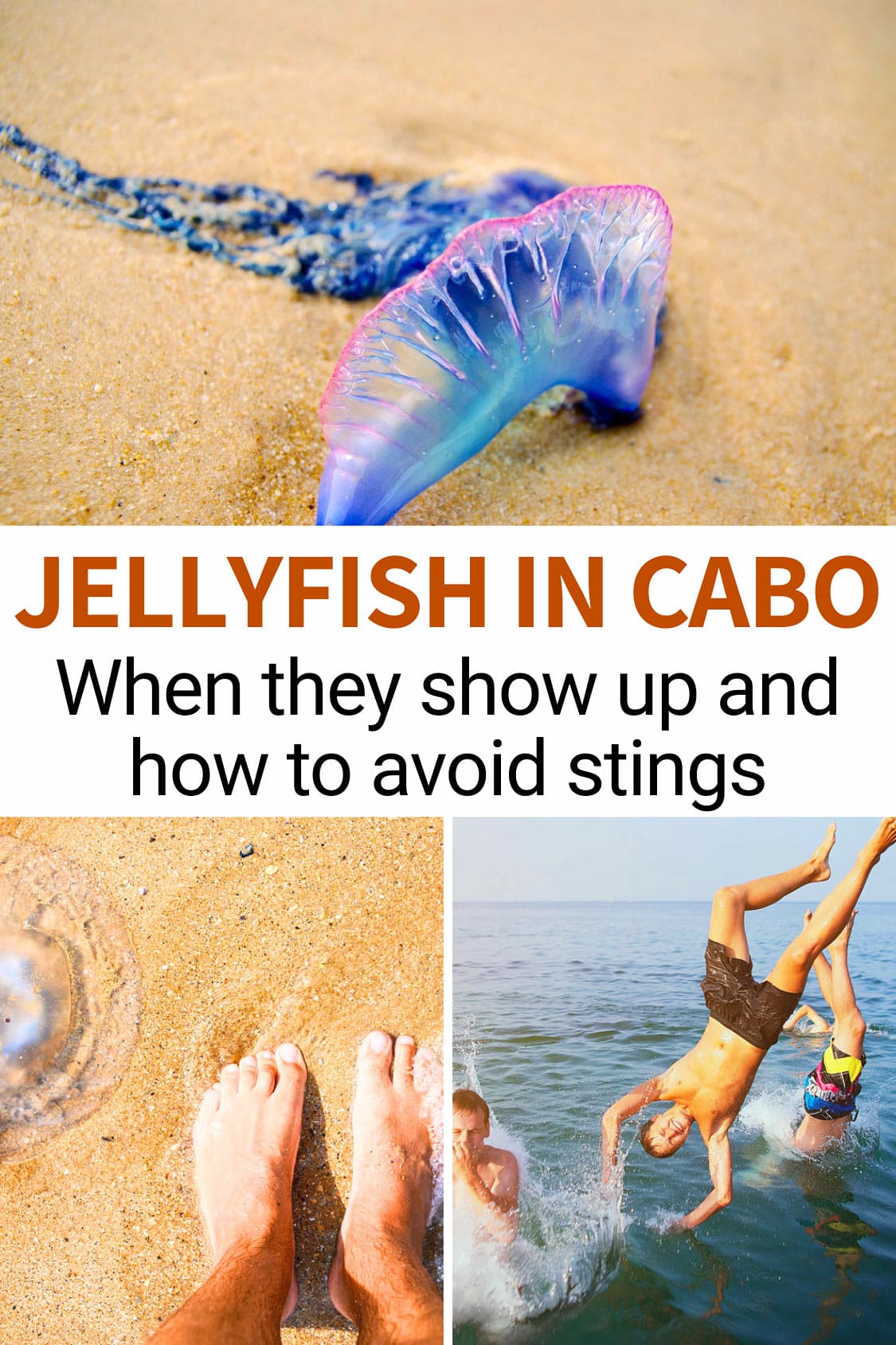
The one worth knowing about is the Portuguese man-of-war (sometimes loosely called a bluebottle).
Technically, it isn’t a jellyfish at all. It’s a siphonophore – a colony of tiny organisms functioning together as one animal.
It’s called that because it kinda looks like an 18th-century Portuguese warship under full sail. You may recognize one by its distinctive blue, purple or pinkish gas-filled float sitting at the water’s surface. Long venomous tentacles trail beneath it.
And those tentacles can deliver a painful sting.
Other jellies
True jellyfish are soft gelatinous sea animals with microscopic stinging cells. They’re also sometimes found around the southern Baja Peninsula, including relatively mild-stinging varieties.
And not every jelly-like blob you see in Cabo is something to worry about.
Harmless gelatinous creatures called salps can easily be mistaken for jellies. They’re transparent, have no stinging tentacles and sometimes wash ashore in large numbers.
Our rule?
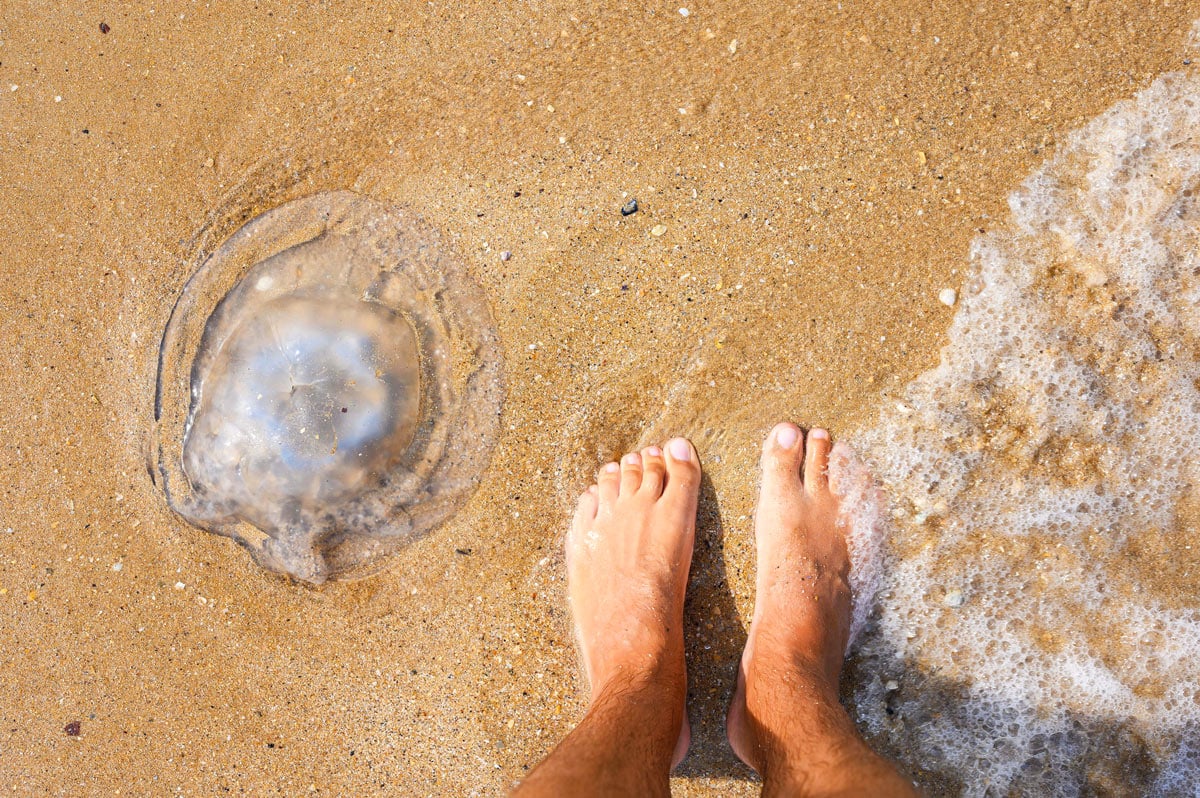
If it’s gelatinous and floating in the water, we give it space. And the same goes for dead-looking ones, washed up on the sand.
When is jellyfish season in Cabo?
There isn’t a neat official “jellyfish season” with a start and finish date.
But you’re more likely to hear about jellyfish when Cabo’s waters are warmer, particularly from summer into fall. That’s because some jellyfish species (and Portuguese men-of-war) thrive and reproduce more quickly in warm water (as opposed to cold).
Which is a drag… That overlaps with some of our favorite months for getting in the water. By October and November, the Sea of Cortez can feel like bathwater!
Jellies and their nastier cousins can also be pushed toward shore by winds, currents and changing weather.
The bottom line? We wouldn’t plan a Cabo vacation around jellyfish. But we would check conditions each day before getting into the water – especially if visiting from through fall.
That’s actually smart advice wherever in the world you’re swimming.
I (Janice) got a mild sting from some jelly creature off the south coast of France at the end of October – when the beach clubs had packed up, tourist season was over and there was a hint of fall chill in the air. Who would have thought!
And no, I hadn’t asked anyone about the water conditions before dashing in… Lesson learned.
How do you know if there are jellyfish at a Cabo beach?
Look for a white or purple flag
Los Cabos uses a beach flag system, and local authorities say a white or purple flag warns of harmful marine life, including aguamala.
The basic Cabo beach flag system is:
- Green – Conditions are safe for swimming
- Yellow – Swim with caution
- Red – Don’t enter the water
- White or purple – Harmful marine life is present
- Black – Beach closed
Conditions can change during the day, so also follow the lifeguards’ instructions.
Don’t confuse a Blue Flag with the beach warning flags
Here’s something that can be confusing.
Many Los Cabos beaches are Blue Flag beaches. That’s an environmental certification recognizing high standards for things like water quality, environmental management and beach facilities. In other words, it’s saying the beach is clean, well cared for and beautiful!
But it doesn’t mean the ocean is automatically safe for swimming that day.
For current swimming conditions, it’s the colored safety flag flying at the beach that matters.
Check ZOFEMAT
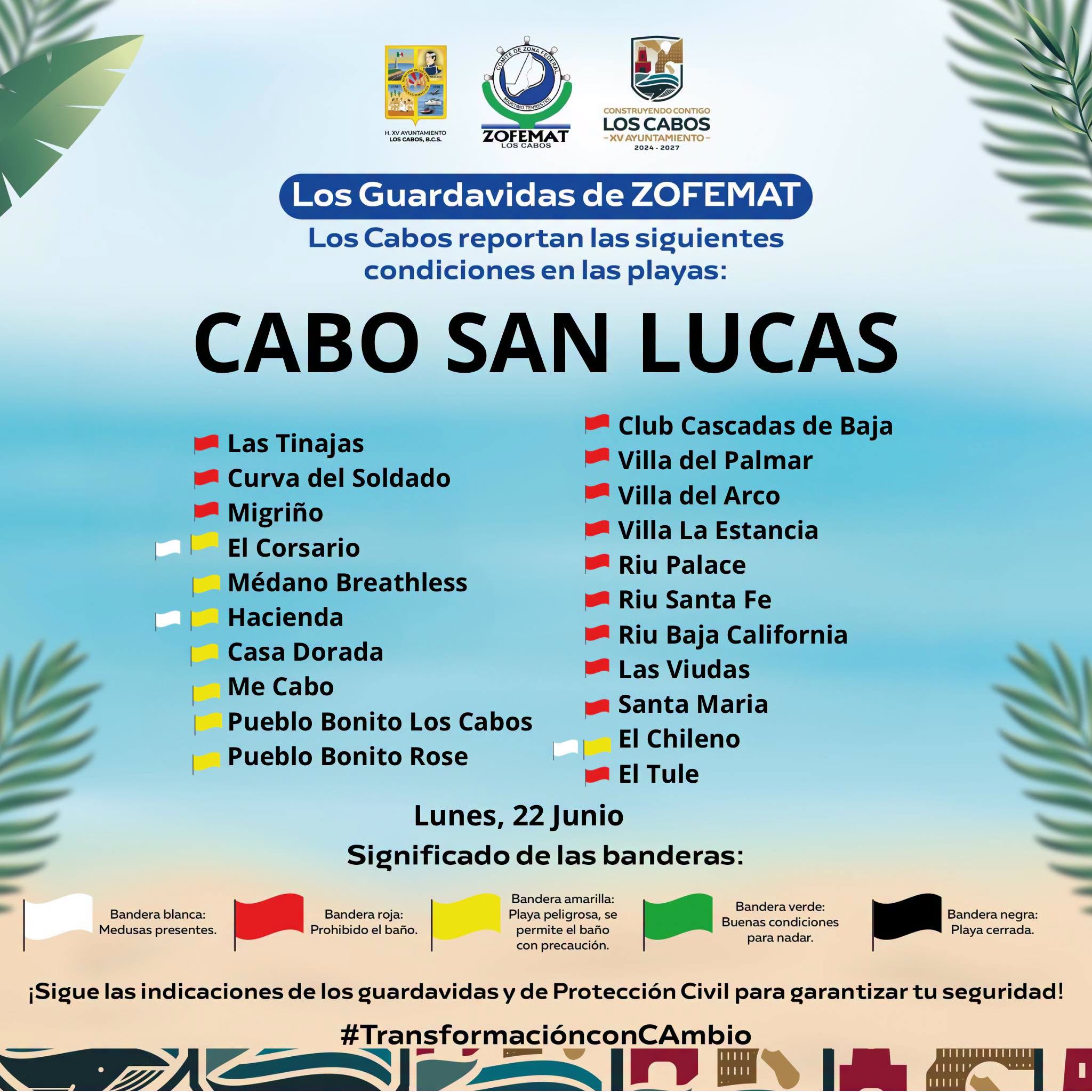
ZOFEMAT (the local authority responsible for Cabo’s beaches) posts daily updates on its Facebook page showing the safety flag for each beach.
Can you see jellyfish before getting into the water?

Portuguese men-of-war can wash onto the sand and look like little shiny blue or purplish balloons.
If we saw a couple washed up along the shoreline, we’d consider that a pretty good reason to ask the lifeguard about conditions before swimming.
And don’t touch one – even if it’s stranded or appears dead. Its tentacles can still sting.
Jellyfish and men-of-war can turn up in numbers too. So if you’re on a boat and spot one floating around, don’t jump in! There may be plenty more nearby.
How to avoid getting stung
A few sensible precautions go a long way:
- Check the beach flag – A white or purple flag means hazardous marine life has been spotted.
- Look along the shoreline – If jellyfish or blue Portuguese men-of-war have washed up, don’t touch them, and ask about conditions before swimming.
- Ask your snorkel crew – At Cabo Pulmo, Chileno Bay and other snorkeling spots, local guides know what’s happening in the water that day.
- Wear a rashguard, skin or wetsuit – More covered skin means less exposed skin available for a tentacle to sting.
We actually bought full-length snorkeling skins for a trip to Bocas del Toro, Panama, after hearing about stinging sea lice there.
They worked brilliantly – and we’d happily pull them out again if a guide on a snorkeling trip, for example, told us jellyfish were around.
What should you do if you’re stung by a jellyfish?
Most jellyfish stings cause localized pain, redness and irritation. They’ll hurt like heck for a bit, but a few hours later, you could be telling war stories about your injury over margaritas at the bar.
But some are more serious.
How bad is a Portuguese man-of-war sting?
We’re not going to whitewash this.
A Portuguese man-of-war sting is no minor nip. The pain hits immediately – an intense burning or searing sensation, often followed by angry red welts tracing where the tentacles touched you.
For most people, it’s extremely painful rather than dangerous, and the worst of the pain usually eases within several hours.
Most importantly, stings are rarely deadly to humans. You definitely want to avoid one, but a sting is very unlikely to be fatal.
Treatment
Both the American Red Cross and Mayo Clinic offer first-aid guidance for jellyfish stings:
- Get out of the water – First things first, get back onto the beach or boat.
- Rinse with seawater – Don’t rinse with fresh water, which can cause remaining stinging cells to discharge.
- Remove any tentacles – Carefully pick off any visible tentacles without touching them with your bare hands. Tweezers are ideal; otherwise, use a gloved hand or some other barrier.
- Use hot water – Immerse the affected area in hot (but not scalding) water for at least 20 minutes, or until the pain eases. Both the Red Cross and Mayo Clinic recommend hot-water immersion for jellyfish stings. Standing under a hot shower – as hot as you can comfortably tolerate – can be an easy way to do this.
- Take an over-the-counter pain reliever if needed – Ibuprofen (Advil) can help with pain and swelling.
- Apply hydrocortisone cream – Once the initial pain has settled down, hydrocortisone cream can help relieve lingering itching and inflammation. If you’re left with significant itching or a rash, an antihistamine such as Benadryl may also help.
- Don’t rub the sting – Rubbing or scraping the area can cause any remaining stinging cells to release more venom.
Vinegar isn’t always best
We’d skip the blanket internet advice to pour vinegar on every Cabo jellyfish sting.
First-aid recommendations depend on what stung you.
There’s actually disagreement as to whether vinegar is helpful (or worse!) for Portuguese men-of-war stings. The American Red Cross, for example, recommends rinsing a Portuguese man-of-war sting with seawater rather than vinegar.
Follow the advice of the lifeguard or medical professional treating you.
And no, don’t pee on it!
That’s one travel myth we can happily put to bed!
When should you get medical help?
Most stings can be managed with first aid.
But call 911 or seek emergency medical care if you or the person stung has any of the following:
- Trouble breathing
- Chest tightness
- Severe dizziness
- Widespread swelling
- Swelling of the face, lips or throat
Also err on the cautious side with a severe sting, an unidentified marine creature or a sting to the face or neck. If you’re in any doubt, see a doctor.
Are jellyfish becoming more common in Cabo?
It’s hard to say.
There’s no clear evidence we’ve found showing that jellyfish are becoming more common specifically in Cabo. (Anecdotally, though, we can say that when we first started visiting Cabo years ago, we don’t remember hearing anything about jellyfish.)
Could warmer oceans mean more jellyfish?
Globally, warmer oceans may be helping some jellyfish species expand their range or bloom more often.
Portuguese men-of-war, for example, have been turning up in places where they’ve historically been unusual – including off U.K. beaches and in the normally chilly waters of Nova Scotia, Canada.
And a 2026 review by researchers at CIBNOR (the major marine research center based in Baja California Sur) notes that human activity and climate change are making jellyfish blooms more frequent, longer-lasting and denser in some places.
It’s not just Cabo
Cabo certainly isn’t alone in dealing with the occasional jelly invasion.
Jellyfish turn up at beach destinations elsewhere in Mexico and around the world. Puerto Vallarta, for example, has raised purple warning flags because of jellyfish several times in recent years.
Hawaii gets them too. Stinging box jellyfish arrive so predictably at some beaches that Waikiki even has a jellyfish calendar forecasting their monthly appearances.
So, should you worry about jellyfish in Cabo?
We’ve spent countless hours messing about in the water in Los Cabos – and, thankfully, neither of us has ever been stung.
That said, we mostly visit in December and January, when the water is cooler and jellies aren’t an issue.
They do turn up from time to time, mostly in the warmer months. But we wouldn’t let the possibility of them keep us out of the water.
Check the beach flag and ZOFEMAT updates, listen to the lifeguards and boat crews, and keep an eye on what’s around you.
If all looked good, we’d get in! That warm Cabo sea is far too tempting to miss.
More helpful Cabo tips
- Can You Drink the Water in Cabo?
- Best (and Worst!) Time to Visit Los Cabos
- Wanna See Whales? 9 Amazing Whale Watching Tours
- Bringing Your Dog to Cabo? What to Know
- How to Get Around Cabo? Bus to Uber
Our favorite resources for planning a trip to Cabo
Resorts: Booking.com is great for scoring a “wow” hotel in Cabo – or at least a decent one. (We especially like their flexible cancellation policy!) Expedia is also worth checking for discounted hotel rates in Cabo.
Vacation homes, condos and rentals: We prefer and use Vrbo (Vacation Rentals by Owner).
Tours: For the best local guided tours in Cabo, see Viator and GetYourGuide.
Car rental: Renting a car in Los Cabos is one of the best ways to explore. Discover Cars searches car rental companies so you get the best rates.
Travel insurance: SafetyWing is designed for frequent travelers, long-term adventurers and digital nomads. It covers medical expenses, lost checked luggage, trip interruption and more. We also have and recommend Medjet for global air medical transportation and travel security.
Need more help?
- See our Start here page. It lists everything we’ve written on Cabo.
- Also check our ultimate Cabo travel guide and our article on Planning your Cabo vacation: What you should know.
Pssst! If you make a booking or purchase through our site, we may earn a small commission (at no cost to you). Thanks!
About the authors